European War
Last and First MenThe European War, known at the time as the War to End War, was the first and least destructive of the world conflicts through which the First Men demonstrated their inability to control their own nature. Its historical importance lies not only in the fighting, but in the unstable peace that followed: suffering raised the possibility of a loyalty beyond the tribe, without overcoming the habits that repeatedly drew the peoples back into conflict.
Background and Causes
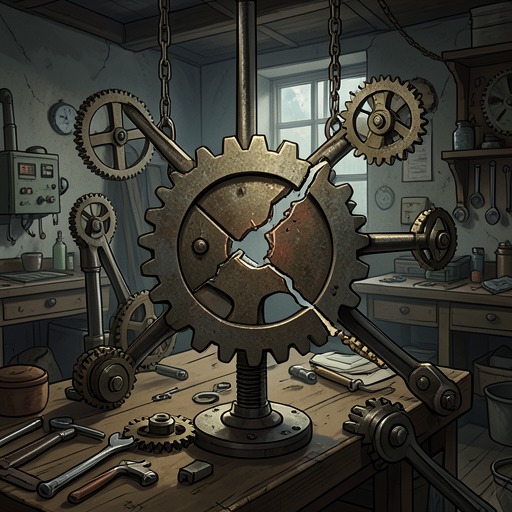
The war emerged in an age when society was changing faster than human nature could accommodate. Increased mastery of physical energy had transformed the demands placed on people once shaped for hunting and fighting: they were now expected to function as citizens of a world-community, while wielding powers their limited judgment was poorly equipped to control. The narrator presents this mismatch as a broad condition of the First Men, not as a single sufficient cause of the war.
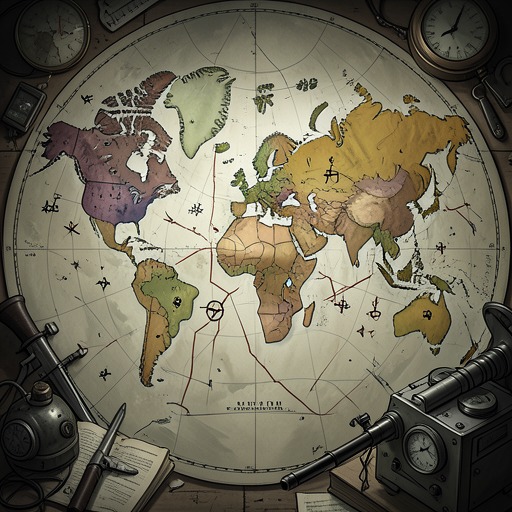
The conflict began through a tangle of motives, some honourable and others disreputable. France and Germany had a genuine difference of temperament, while Germany and England were divided by a more superficial rivalry. Stupidly brutal gestures by the German government and military command helped split the world into opposing camps. Neither side, the account stresses, had seriously intended the war, and neither camp represented a distinct principle that could clearly justify its claim to stand for civilization.
The Conflict and Its Contradictions
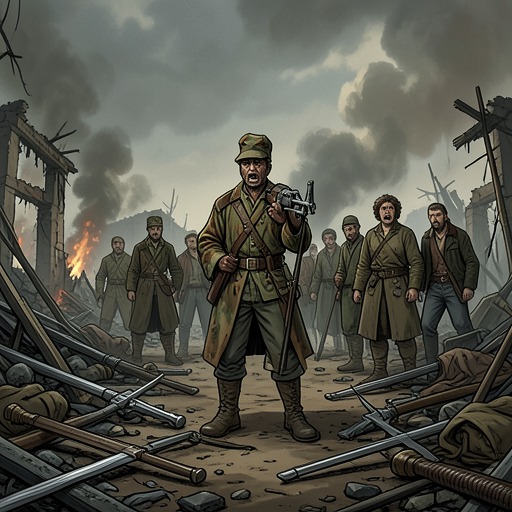
As the war proceeded, each side believed that civilization depended on its own victory. Yet both repeatedly gave way to sheer brutality. The account refuses to make that brutality the whole story: each side also produced acts of heroism and generosity that were unusual by the standards of the First Men. Conduct that a more self-governing society might regard as merely sane required rare vision and self-mastery in this one.
The war therefore embodies the book’s central contrast between primitive impulse and the possibility of developed conduct. Its peoples could act with courage and generosity, but those capacities did not prevent them from being drawn into violence or from mistaking their own camp for civilization itself. The conflict was at once evidence of political incompetence and a setting in which exceptional self-command could briefly appear.
The Peace That Followed
As the months of suffering accumulated, the warring peoples developed a genuine, even passionate desire for peace and a united world. The conflict of tribes had, for a time, brought forth a spirit loftier than tribalism. But this new aspiration lacked both clear guidance and the courage of conviction. The resulting peace thus carried two meanings at once: it revealed an emerging vision of a higher loyalty, while exposing how persistently tribal attachments survived beneath it.
The account contrasts this aftermath with the peace after the later Anglo-French War. After the European War, arguments over indemnities, reparations, and security continued, and Europe remained divided into hostile camps, even when that division had become largely artificial and sentimental. The later change in mood was more radical: after the Anglo-French War, patriotism temporarily faded, the former enemies worked with the League of Nations to reconstruct each other as well as themselves, and the League’s investigation of the war’s origins exposed both combatants to the world. That contrast makes the European War’s settlement significant but incomplete: its impulse toward unity had not yet displaced suspicion in national policy.
Historical Significance
The narrator calls the peace after the European War one of the most significant moments in ancient history because it condensed the First Men’s possibility and limitation into a single outcome. The war generated a real desire for unity, but did not give that desire reliable direction or lasting conviction. A higher loyalty surfaced inside tribal conflict without becoming strong enough to secure the future.
The event also belongs to the book’s wider account of humanity’s recurring difficulty in governing its own powers and impulses. The First Men could form a world-community and glimpse a loyalty beyond the tribe, yet remained vulnerable to brutality and renewed national division. The European War’s importance is therefore measured not simply by its relative destructiveness, but by the narrow historical opening that followed it—and by how little that opening, at first, could guarantee.